Hey there, adventurers! 🚀 March is Women’s History Month, and that means it’s the perfect time to get into some amazing stories about real-life heroes—women who changed the world! But here’s the coolest part: these stories aren’t just about the past. They can help us see how we can make a difference today.
From fearless astronauts to bold artists, from inventors to activists, this article is packed with ways parents (and teachers, and awesome grown-ups everywhere) can share inspiring stories with kids. And guess what? It’s not just about reading books—it’s about bringing these stories to life with fun activities, deep conversations, and even a little bit of pretend play.
So, grab your explorer’s hat (or superhero or superheroine cape), and let’s discover how stories of incredible women can spark big dreams in the next generation! ✨
Weave Real-Life Examples into Narratives
One of the most impactful ways parents can introduce empowering stories to young girls during Women’s History Month is by weaving real-life examples into engaging, relatable narratives. A personal favorite approach is sharing stories of trailblazing women through books and interactive activities, which not only educate but also inspire action.
Last year, I introduced my daughter, Mia, to the story of Clara Lemlich, a young Ukrainian immigrant who led the Shirtwaist Makers’ Strike of 1909. We read “Brave Girl: Clara and the Shirtwaist Makers’ Strike of 1909” together, and Mia was captivated by Clara’s courage in standing up for workers’ rights despite overwhelming odds. To make the story come alive, we turned it into a mini project. Mia created a “protest sign” with her own message about fairness and equality, and we discussed how standing up for what’s right can make a difference-even today.
The beauty of this approach lies in its simplicity. By combining storytelling with hands-on activities, children internalize the lessons more deeply. For example, after learning about Clara, Mia started noticing injustices in her own world—like when her friend was excluded from a game at school—and felt empowered to speak up.
The key is to choose stories that resonate with your child’s interests. If they love science, share the story of Katherine Johnson and her groundbreaking work at NASA. If they’re drawn to art, Frida Kahlo’s resilience and creativity can be incredibly inspiring. Pair these stories with activities like creating art inspired by Frida or solving simple math puzzles in honor of Katherine.
What makes this method so special is that it doesn’t just teach history—it encourages children to see themselves as part of an ongoing narrative of change. When Mia proudly displayed her protest sign on our fridge, I realized she wasn’t just learning about Clara Lemlich; she was seeing herself as someone who could make a difference too. And isn’t that the ultimate goal? To empower our children to dream big and act boldly in their own lives?
John Lattanzio, Owner, John Angelo Photography
Share Diverse Journeys of Women
One powerful way to introduce empowering stories to young girls is to share the diverse journeys of women who have defied the odds and defined success on their own terms. I’ve found that girls resonate most with stories that feel authentic, relatable and show that “making it” rarely follows a straight line.
When I share my own story, I don’t gloss over the hard parts. I talk about how as a young immigrant to America, I struggled to make ends meet waiting tables while dreaming of building my own business. I share the fears and insecurities I battled, the doors that closed in my face, and the naysayers who doubted me. But I also share how through resilience, resourcefulness and a refusal to fit anyone else’s mold, I grew that seed of a dream into a multimillion dollar investing career—on my timeline, based on my definition of a rich life.
I unpack this journey with all its twists and turns to show girls that there is no one way to be a strong woman. That owning your unique story is your superpower. I emphasize that every supposed “detour” can be an opportunity to mine new wisdom, skills and self-insight if you don’t let it detract you from your larger vision. When we claim the lessons in our layered stories, they become the fabric of our success.
So my advice is to share women’s stories in all their real, raw and remarkable detail. Let girls see themselves in women who have zigged, zagged, fallen and flown. Highlight how they alchemized adversity into assets and authored original paths to purpose. Introduce them to the full spectrum of how women can make history—so they know with certainty that they can make their own mark.
Inge Von Aulock, CEO, Hire and Fire your Kids
Make Stories Relatable and Engaging
As a parent, I’ve found that introducing empowering stories to young girls during Women’s History Month is both crucial and rewarding. The key is to make these stories relatable and engaging. I recommend starting with age-appropriate biographies of diverse women who’ve made significant contributions in various fields. It’s important to highlight not just their achievements, but also the challenges they overcame. This helps girls understand that success often comes with perseverance.
I also suggest incorporating interactive elements, like role-playing or art projects based on these stories, to make the learning experience more immersive. Lastly, don’t limit these stories to just March—make it a year-round practice to celebrate women’s accomplishments.
I vividly remember reading the story of Mae Jemison, the first African American woman in space to my daughter when she was just six years old. We then built a cardboard spaceship together and “traveled” to different planets, discussing what it might be like to be an astronaut. This hands-on approach not only taught her about a remarkable woman in history but also sparked her interest in science and space exploration. It’s these kinds of engaging, personal connections to historical figures that can truly inspire and empower young girls.
Steve Shen, Digital Marketing Director, All 4 Kids Online
Introduce Women’s History Through Plays
As a mother to an incredibly vibrant 6-year-old girl, I’ve begun introducing her to women’s history in a way that feels exciting and empowering. While she’s seen “Wonder Woman,” loves “Mulan,” and is convinced she’s one of the Powerpuff Girls, I wanted her to see where we really began.
Being in school, she’s already hearing the classic dismissive remarks from boys with statements like, “Girls aren’t that fast,” or, “Girls are weak.” While comments like that could be discouraging, we’ve flipped the narrative and used them as fuel for confidence. Instead of letting those words tear her down, we talk about women who proved the world wrong.
One of the most powerful experiences we recently shared was seeing the Tony Award-winning Broadway play, “Suffs.” It tells the incredible, raw, and often overlooked story of the suffragists; the women who fought relentlessly for the right to vote.
Unlike the polished, simplified versions of history we often hear, Suffs doesn’t sugarcoat the struggles, sacrifices, and sheer determination these women had to push through. We see beyond the speeches and marches; which shows perseverance and pure grit in fighting a system designed to keep them silent. After the show, my daughter had so many questions: “Why couldn’t women vote?” “Did they go to jail for just wanting rights?” “Were there little girls like me back then?” It sparked a whole conversation about strength and the power of using your voice.
My tip for introducing empowering stories during Women’s History Month is to make it real. Stories of women’s achievements aren’t just in history books, they’re in plays, movies, conversations, and the real-life examples we set every day. Take them to see stories come to life, introduce them to women making history now, and remind them that they, too, are making history.
Doreen Nunez, Founder & Creative Director, Mommy Rheum
Choose Stories with Strong Female Role Models
Stories inform the way children view the world. Exposing young girls to inspiring stories throughout Women’s History Month instills confidence and drive. Parents can start by choosing books and stories with strong female role models who broke ceilings in science, leadership, and sports. Books like “Good Night Stories for Rebel Girls” contain real-life female role models, making history available and inspiring.
The most interesting story to tell is that of Malala Yousafzai, who advocated for girls’ education despite vast hurdles. Her story reminds us of being determined and the power of speaking up in order to effect change. Reading “Malala’s Magic Pencil” with a child can spark conversations about bravery and determination. Reading about actual heroes—teachers, doctors, and leaders—makes girls realize that strength does not only come from books on the past. Getting them to write or draw their own stories reminds them that their voices count.
Cory Arsic, Founder, Canadian Parent
Discuss Stories of Women Overcoming Adversity
Teaching young girls about empowering themselves during Women’s History Month is close to my heart. Why? Because it can do so much for building their confidence, emotional intelligence, and self-worth like nothing else. When I hear tales of women who have overcome adversity, managed their emotions, and created change, it sparks something powerful in me, and I think it can do the same for younger girls.
Take Dr. Mae Jemison, for example, the first Black woman to launch into space. Her story is one that hits home for me. As a child, she faced lots of naysayers, yet she never let that kill her dream. She conquered self-doubt, rose above societal challenges, and always believed in her potential. Her story is a powerful testament to the importance of self-belief, adaptability, and perseverance—qualities every girl should learn. And yes, there’s lots of research, like that in the Developmental Psychology Journal, that shows just how important these traits are for success.
It’s not just about reading these stories aloud and sharing them with young girls. I would recommend parents ask questions like, “How do you think she felt when people doubted her?” or “What would you do in her situation?” This doesn’t just keep them involved; it helps them understand and navigate their own feelings. This technique not only makes them better at solving problems but also boosts their strength.
I also encourage girls to write about times they’ve faced and overcome challenges themselves. Why? Because this kind of reflection boosts their confidence even further and cements their belief in what they can do.
By sharing these pioneering women’s stories and encouraging an open dialogue about emotions and challenges, I help young girls see themselves as capable and strong, ready to face whatever comes their way, just like the awe-inspiring women we talk about.
Navi Hughes, Therapist & Founder, Navi Hughes
Share Engaging Stories of Pioneering Women in Science
Throughout Women’s History Month, parents can help their daughters get to know about women who lived outside of the norm and changed the world as a result. One such means is through discussing stories of resilience that can help little girls grasp what they are capable of. To do this, it is significant to not only discuss the triumphs but also the challenges these women overcame to realize them, indicating that sticking through tough times is the key to success.
Look to the life of Eleanor Roosevelt, a woman who made the position of First Lady one of protest and activism. Through personal adversity, having struggled with a troubled marriage and losing her parents at a young age, she utilized her role to advocate for human rights and social justice. Her life inspires young girls to see their voices matter, no matter the adversity.
These anecdotes don’t have to be remote or theoretical. Parents can recount their own experiences, illustrating how they’ve overcome challenges in their lives. Personal anecdotes make the message more compelling, illustrating that girls can change their world, too.
Dr. Barbara Sparacino, Founder, The Aging Parent Coach
Highlight Resilience in Eleanor Roosevelt’s Life
Parents can empower young girls during Women’s History Month by sharing engaging stories of pioneering women in science. One such story is that of Ada Lovelace, the world’s first computer programmer. Despite societal norms of the 19th century, Ada’s passion for mathematics led her to collaborate with Charles Babbage on the Analytical Engine, where she envisioned applications beyond mere calculation. Her story exemplifies how curiosity and determination can break barriers, inspiring young girls to pursue their interests in STEM fields. We offer an interactive narrative featuring Ada Lovelace, allowing children to embark on an educational adventure that brings her remarkable contributions to life.
Matthias Neumayer, Co-Founder & CEO, Oscar Stories
We’d love to hear from you!
What did you think about this article? Share your thoughts in the comments below!
- What’s one idea from this article that inspired you the most?
- How will you try this in your own family adventures?
- Do you have any fun tips or experiences to add to the quest?
Let’s keep the conversation going! 🌟
About Noah’s Quest® Insights
Hey there, friends! This is 11-year-old Noah from the book of Sev Emanuel Pretila, Noah’s Quest®. Welcome to Noah’s Quest® Insights! This is the spot where super-smart grown-ups (and some pretty cool kids with adult help) share their best ideas to make family time extra special. Think of it like a treasure map packed with all kinds of ways to have fun, learn new things, and go on big adventures—together! Whether it’s finding your next favorite book, making something awesome, or just discovering cool ways to connect, Noah’s Quest® Insights is here to help.
Every article is made for families with kids 12 and under, just like me, and it’s all about making life more fun, creative, and full of wholesome adventure. So grab your imagination, your adult (if you’re a kid like me), and let’s go exploring!
Read my story, too!

Did you know that before the Noah’s Quest and Friends Fave Book Award, the blog, or the awards program, there was a book all about me? Yup, I’m the main character in an awesome story by Sev Emanuel Pretila! It’s called Noah’s Quest. If you’re curious about how it all began and want to read my adventure, you’ve got to check it out. You’ll love it—I pinky promise! Adventure is waiting! Visit the About the Book page to get started.
– Noah from Noah’s Quest by Sev Emanuel Pretila
P.S. The book is just 99 cents on Amazon today! Hurry! Check it out here. Thanks!
Helpful Shortcuts
- About Noah’s Quest®
- About the Book: Noah’s Quest® by Sev Emanuel Pretila
- Blog
- Contact Us
- Friends of Noah’s Quest®
- Making a Difference
- News
- Noah’s Quest® and Friends Blog
- Noah’s Quest® Interviews
- Noah’s Quest® Merch
- Noah’s Quest® Privacy Policy, Terms of Service, and Disclaimer (Version for Adults)
- Noah’s Quest® Review Requests
- Noah’s Quest® Terms of Service
- Noah’s Quest® Website Disclaimer
- Noah’s Quest® and Friends Fave Books Award
- Noah’s Quest® Insights
- Noah’s Quest® Privacy Policy
- Noah’s Quest® Review Policy
- Subscribe to Noah’s Quest®
- Testimonials
Recommended Reads

Principles and Mindsets for Guiding Children Through Uncertainty and New Adventures
What if not knowing was your child’s secret superpower, not a flaw? This roundup explores how educators and leaders rethink uncertainty—and invites you to discover why by reading on inside.
Keep reading
New Year Stories or Themes Teaching Children Goal-Setting, Kindness, and New Beginnings
Ever wonder why kids love drawing their goals or acting out stories? Find out how small steps, peer cheer, and creative play can actually help kids succeed in real life.
Keep reading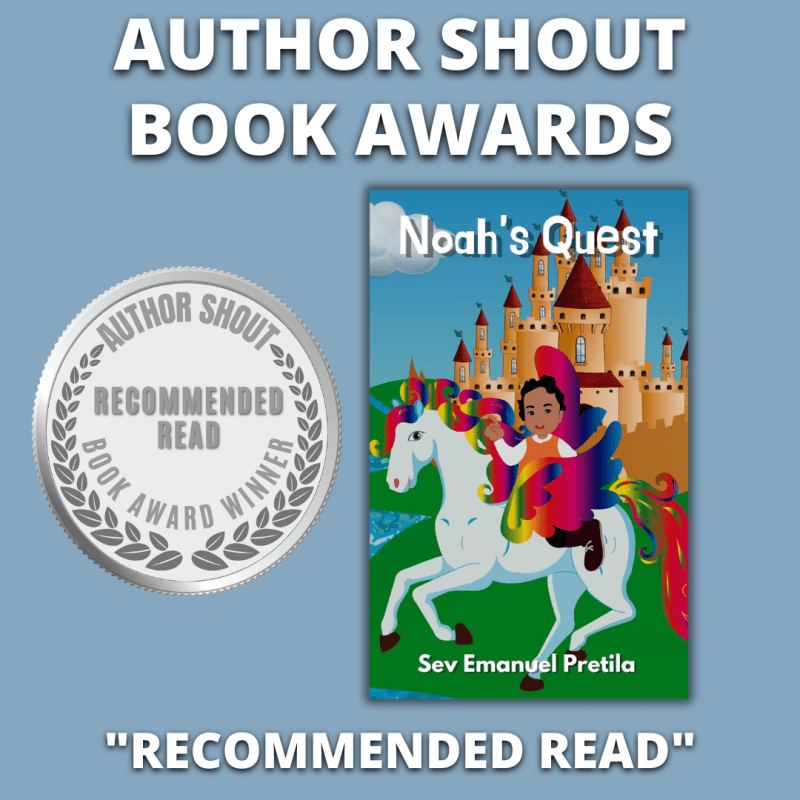
Noah’s Quest® is a 7th Annual Author Shout Book Awards Recommended Read Winner
Noah’s Quest® by Sev Emanuel Pretila has been recognized as a 7th Annual Author Shout Book Awards Recommended Read Winner, an honor that highlights its compelling storytelling and literary quality.
Keep readingSomething went wrong. Please refresh the page and/or try again.
Discover more from Noah's Quest®
Subscribe to get the latest posts sent to your email.
 Noah's Quest®