A love of reading doesn’t always come naturally—it takes nurturing, patience, and the right story to ignite curiosity. Research shows that reading to children as early as possible significantly boosts their cognitive and emotional development. But what makes a book more than just an entertaining distraction? Why do certain stories linger in the minds of young readers for years, while others fade into obscurity? It’s not just the plot, but the way characters engage with the world, the questions they raise, and the lessons they impart. A good book becomes a bridge, fostering empathy, critical thinking, and a lifelong love of reading.
Timeless Values Inspire Lifelong Love
As a child, my favorite book was “Chrysanthemum” by Kevin Henkes. My name is Amanda, and when I was in kindergarten and first grade, the boys in my class would tease me by calling me “A-Man-DUH!” As a sensitive child, their words really hurt my feelings. That experience, along with many others, ultimately inspired me to become a children’s book author—to help instill timeless values in kids and show them the power of words and kindness.
One of the most important lessons I took from “Chrysanthemum” was that being unique is something to be proud of. The book also taught me the importance of treating others with respect and how one kind person can have a lasting impact on someone’s life.
Looking at the story now as an adult, I can see the key elements that made “Chrysanthemum” so powerful:
- Timeless Values – The book reinforces self-acceptance, kindness, and resilience—lessons that never go out of style.
- Relatable and Meaningful Storyline – Many children experience teasing or self-doubt, making Chrysanthemum’s journey incredibly relatable.
- Strong Morality – The story highlights the importance of standing up for yourself and treating others with compassion.
- Reinforcement from Others – Just as Chrysanthemum’s parents and teacher helped her embrace her name, positive encouragement from others can shape a child’s confidence.
Books are more than just stories. They are a gateway to learning, personal growth, and lifelong values. They have the power to shape a child’s worldview, strengthen their character, and inspire them to dream big. That’s why I’m passionate about writing books that not only entertain but also leave a lasting, meaningful impact—just like “Chrysanthemum” did for me.
Amanda Elizabeth, Author, Raised Right Books
Engaging Characters Spark Curiosity
An effective children’s book doesn’t merely read well aloud—it provides a basis for curiosity, analytical thinking, and long-term love of reading. Strong books engage young minds with fully realized characters, good plots, and interactive language. “The Very Hungry Caterpillar” reinforces sequencing and number concepts by repeating them, reaffirming learning naturally. “Charlotte’s Web” fosters emotional intelligence by inviting children to connect with characters and struggle with complex emotions. These are the factors which make reading an active experience rather than a passive one.
Illustrations enhance this effect. Pictures aid understanding, particularly for beginning readers who use visual information. “Where the Wild Things Are” employs expressive illustration to make feelings real, making intangible concepts concrete. Rhyming and rhythmic books, such as “Green Eggs and Ham,” tap into auditory learning and enhance language recall. Interactivity, whether in wordplay or embedded information in pictures, maintains children’s interest and desire to investigate further.
The greatest books don’t only entertain—they stimulate greater thinking. Nonfiction tales such as “How Do Dinosaurs Say Good Night?” present real-world ideas in an entertaining manner, making kids question and look for answers. If reading makes them curious, kids don’t regard books as homework—they regard books as instruments for exploration. That difference makes reading a lifelong routine.
Mohit S. Jain, Founder, Genie Academy
Imagination Fuels Lifelong Reading
Books that connect with children’s emotions and spark their imaginations often inspire a lifelong love of reading in children. Just like adults, children want to read stories that are engaging and interesting. Kids also often appreciate reading books with characters who are around their age, allowing them to identify more with the protagonists.
Creating unique stories that let kids use their imagination—whether the story is about a new topic that interests them or set in another world entirely—also ignites a desire to learn more, and this can help get kids excited about reading.
Telling a good story with interesting characters, a world that feels real, and stakes that feel significant to the reader are all important elements in storytelling, and these are things that children appreciate, too. If you can tell an alluring story, no matter the subgenre, your book is definitely more likely to interest children, which can make them want to read more.
Emily Deaton, Editor and Book Coach, KWE Publishing
Fun Stories Make Reading Exciting
From my experience, the best children’s books make reading fun and exciting. A good story grabs a child’s attention with characters they like and adventures that make them want to know what happens next. When a book feels like a fun journey, kids enjoy reading instead of seeing it as work. Bright and colorful pictures help bring the story to life, making it easier to understand. Simple words and a nice rhythm keep kids interested while also helping them learn new words. A book that feels easy to follow but still exciting makes reading something to look forward to.
I believe books that make kids think, ask questions, and imagine new things stay with them the longest. When a story connects with their feelings or teaches them something new, they start to see reading as a way to explore the world. Books with rhymes, repeated words, or fun surprises keep kids involved and excited to join in. Stories that show different places, people, and ideas help kids stay curious and open-minded. A book that makes a child laugh, wonder, or dream is one they will want to read again and again, helping them love books for a long time.
Cory Arsic, Founder, Canadian Parent
Personal Stories Resonate with Readers
Creating a lifelong love of reading through children’s books begins with stories that resonate on a personal level. When characters face challenges, overcome fears, or explore new worlds, readers, regardless of their age, find themselves mirrored and inspired. For instance, classics like “Charlotte’s Web” or “Where the Wild Things Are” present timeless themes of friendship, courage, and discovery that encourage children to explore further, reinforcing the joy of reading as both an adventure and an emotional journey.
Illustrations also play a pivotal role in captivating young minds. Bright, colorful images, or even whimsical black-and-white drawings, can stimulate imagination and help children visualize the story, making complex ideas more understandable. The magical drawings in “Harry Potter” books, for example, not only bring the story to life but also complement the text, allowing young readers to dive deeper into the magical world J.K. Rowling created. A well-crafted children’s book acts as a gateway, not just into the realms of literacy but into a lifelong relationship with learning and curiosity.
Alex Cornici, Writer, Cheap Places To Go
Cognitive Friction Engages Young Minds
The secret sauce of a children’s book that sparks a lifelong love of reading isn’t just about cute characters or catchy rhymes—it’s about friction. Not the kind that makes a story frustrating, but the kind that makes a young brain lean in.
The best children’s books create just enough cognitive friction—surprising turns of phrase, slightly-too-big words, storylines that hint at something deeper—to engage kids at the perfect level of challenge. When a book respects a child’s intelligence and curiosity instead of spoon-feeding them, it signals: Hey, there’s more to discover here. That little spark of effort, that tiny puzzle to solve, is what turns passive listeners into lifelong seekers.
Great children’s books also treat the adult reader as a co-conspirator. Kids pick up on this. If a book is tedious for a parent, they rush through it. But if the adult is laughing, pausing, marveling? The child learns that books aren’t just for kids—they’re for everyone. And that’s when reading becomes a lifelong habit, not just a childhood phase.
The books that stick with us aren’t just “fun” or “educational.” They leave gaps, questions, moments of wonder—just enough to make a child think, I need to know more. That’s how a book becomes a doorway instead of a dead end.
Derek Pankaew, CEO & Founder, Listening.com
Fantasy Adventures Promote Growth
According to me, “The Hobbit” by J.R.R. Tolkien stands out as a book both children and adults can enjoy together. It’s more than just a fantasy adventure; at its core, it’s about growth, resilience, and stepping outside one’s comfort zone. That’s something I’ve seen firsthand at Edumentors, where students often need the right guidance to take on academic challenges they once thought impossible.
Parents reading alongside their children can use this book to spark discussions about how Bilbo’s evolution from hesitant to courageous mirrors the challenges young learners face. Stories like this don’t just entertain; they shape the way children think and approach learning, making them an invaluable tool for both education and personal development.
Tornike Asatiani, CEO, Edumentors
Relatable Characters and Vivid Illustrations
Children’s books that spark a lifelong love of reading and curiosity tend to share a few special ingredients.
First, they beckon children into imaginative worlds with characters they deeply relate to—characters whose hopes, struggles, and adventures mirror their own inner feelings and experiences.
Second, vivid illustrations unlock doors to curiosity, making the words come alive, inviting children inside a visual adventure easy for young minds to explore again and again.
Third, engaging rhyme, rhythm, or playful language tickles kids’ natural love of sounds, language, and storytelling, fueling their desire to read aloud, remember, and repeat.
Fourth, these books encourage wonder through thoughtful questions and subtle lessons woven into the narrative, gently prompting young readers to ask “why” and “how,” long after the cover is closed.
Finally—and perhaps most importantly—they nurture moments of closeness and connection. When children cuddle up and bond with a warm voice guiding them through a story, reading becomes linked to safe spaces, affection, discovery, and joy.
Together, these powerful elements—relatable characters, captivating illustrations, engaging language, quiet questions, and meaningful connection—transform children’s books into lifelong companions, quietly cultivating endless curiosity and a deep, enduring love for reading.
Austin Benton, Marketing Consultant, Gotham Artists
Books Foster Imagination and Empathy
When children are exposed to engaging stories, they not only learn to read but also develop imagination, empathy, and critical thinking. Books help children understand themselves and the world around them, building a foundation for lifelong learning. As children grow, their reading preferences evolve, from simple picture books to more complex stories. This mirrors their cognitive development, making books a powerful tool for growth.
For example, reading aloud to a toddler or engaging an older child in a story can foster a natural love for books that extends into independent reading. The key is consistency. By making books a regular part of daily life, whether it’s through bedtime stories or casual reading time, parents can encourage curiosity and a deep connection to learning.
The earlier you introduce books, the more likely children are to develop a passion for reading that will last.
Mona Hovaizi, Founder & CEO, Gaux
Design and Presentation Matter
Children’s books need to grab attention right away, which is why design and presentation matter. Bright colors, engaging illustrations, and creative typography help draw kids in. But beyond that, a good story—one that’s suited to their age and full of ideas that inspire their imagination—is key.
If we want kids to develop a love for reading, it has to start at home. When they see parents reading regularly, they’re much more likely to pick up the habit themselves. Having books available—whether by buying them or taking kids to the library—also makes a big difference.
In a world where social media easily pulls kids away from books, stories have to compete by being truly captivating. The right mix of visuals, storytelling, and themes that make them think and dream can keep them engaged and excited about reading.
Joaquin Calvo, Director, Comligo Spanish
We’d love to hear from you!
What did you think about this article? Share your thoughts in the comments below!
- What’s one idea from this article that inspired you the most?
- How will you try this in your own family adventures?
- Do you have any fun tips or experiences to add to the quest?
Let’s keep the conversation going! 🌟
About Noah’s Quest® Insights
Hey there, friends! This is 11-year-old Noah from the book of Sev Emanuel Pretila, Noah’s Quest®. Welcome to Noah’s Quest® Insights! This is the spot where super-smart grown-ups (and some pretty cool kids with adult help) share their best ideas to make family time extra special. Think of it like a treasure map packed with all kinds of ways to have fun, learn new things, and go on big adventures—together! Whether it’s finding your next favorite book, making something awesome, or just discovering cool ways to connect, Noah’s Quest® Insights is here to help.
Every article is made for families with kids 12 and under, just like me, and it’s all about making life more fun, creative, and full of wholesome adventure. So grab your imagination, your adult (if you’re a kid like me), and let’s go exploring!
Read my story, too!

Did you know that before the Noah’s Quest and Friends Fave Book Award, the blog, or the awards program, there was a book all about me? Yup, I’m the main character in an awesome story by Sev Emanuel Pretila! It’s called Noah’s Quest. If you’re curious about how it all began and want to read my adventure, you’ve got to check it out. You’ll love it—I pinky promise! Adventure is waiting! Visit the About the Book page to get started.
– Noah from Noah’s Quest by Sev Emanuel Pretila
P.S. The book is just 99 cents on Amazon today! Hurry! Check it out here. Thanks!
Helpful Shortcuts
- About Noah’s Quest®
- About the Book: Noah’s Quest® by Sev Emanuel Pretila
- Blog
- Contact Us
- Friends of Noah’s Quest®
- Making a Difference
- News
- Noah’s Quest® and Friends Blog
- Noah’s Quest® Interviews
- Noah’s Quest® Merch
- Noah’s Quest® Privacy Policy, Terms of Service, and Disclaimer (Version for Adults)
- Noah’s Quest® Review Requests
- Noah’s Quest® Terms of Service
- Noah’s Quest® Website Disclaimer
- Noah’s Quest® and Friends Fave Books Award
- Noah’s Quest® Insights
- Noah’s Quest® Privacy Policy
- Noah’s Quest® Review Policy
- Subscribe to Noah’s Quest®
- Testimonials
Recommended Reads

Principles and Mindsets for Guiding Children Through Uncertainty and New Adventures
What if not knowing was your child’s secret superpower, not a flaw? This roundup explores how educators and leaders rethink uncertainty—and invites you to discover why by reading on inside.
Keep reading
New Year Stories or Themes Teaching Children Goal-Setting, Kindness, and New Beginnings
Ever wonder why kids love drawing their goals or acting out stories? Find out how small steps, peer cheer, and creative play can actually help kids succeed in real life.
Keep reading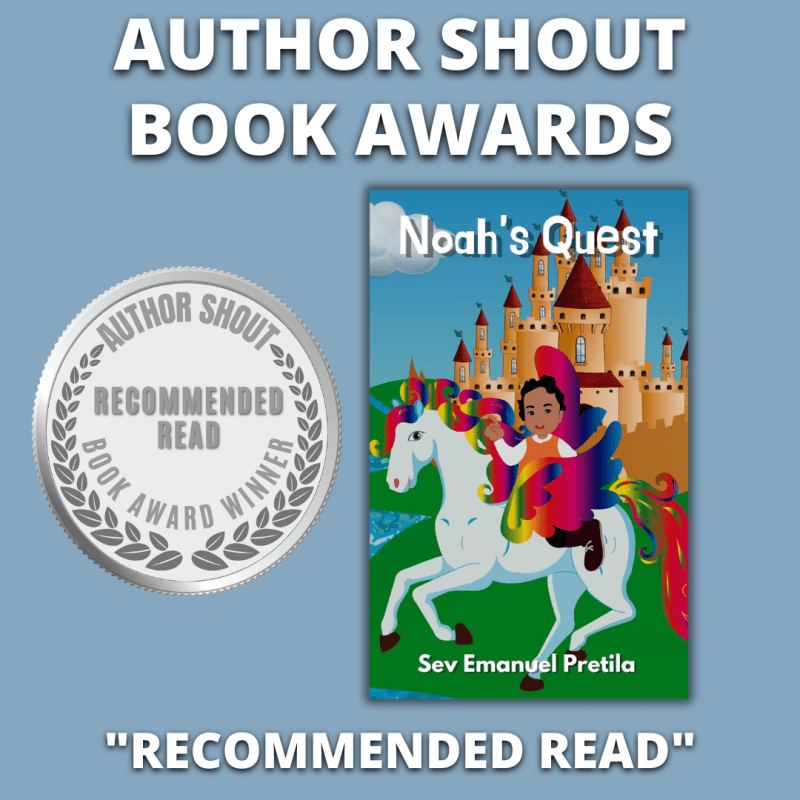
Noah’s Quest® is a 7th Annual Author Shout Book Awards Recommended Read Winner
Noah’s Quest® by Sev Emanuel Pretila has been recognized as a 7th Annual Author Shout Book Awards Recommended Read Winner, an honor that highlights its compelling storytelling and literary quality.
Keep readingSomething went wrong. Please refresh the page and/or try again.
Discover more from Noah's Quest®
Subscribe to get the latest posts sent to your email.
 Noah's Quest®