Editor’s Note:This roundup includes thoughtful reflections on how fiction can help children process challenges, with brief references to topics such as anxiety, trauma, and family instability. Reader discretion is advised
“Reading fiction is important. It is a vital means of imagining a life other than our own, which in turn makes us more empathetic beings.”
– Ann Patchett
Books are gateways to countless new worlds. Fiction stories place us in the shoes of others and make us feel their joys and sorrows. It helps us understand the challenges that others face. Adventure stories in particular give wings to our imaginations. For youngsters, adventure books are the medium to boost their intellectual and emotional development. These stories help shape young minds and steer them in the right direction.
Adventure books play a key role in developing problem-solving skills in children. By exposing young minds to diverse scenarios and multi-faceted perspectives, adventure stories boost critical thinking in young ones. They become mentally flexible and adept at solving problems. Adventure books also help in making children resilient. Through adventure stories, children journey to faraway fantasy worlds and come in contact with an intricate web of emotions and social interactions. Through the stories of others, the ability to get back on their feet after falling multiple times is ingrained in young readers. Adventure stories open the doors to understanding the complexities of humanity.
Let us see how adventure stories develop resilience and problem-solving skills in young adults.
Adventure Stories Build Mental Toughness in Children
Adventure stories teach kids that challenges are part of the journey. I remember my son reading Hatchet—a boy stranded in the wild, forced to think fast and stay calm. After finishing it, he told me, “He never gave up. He kept trying even when everything went wrong.” That stuck with him.
The value of these stories is in their grit. Characters fail, adapt, and try again. Children absorb that mindset naturally. They start to see setbacks as puzzles, not dead ends. My takeaway: give them stories with stakes. Let them watch fictional characters face uncertainty and find a way through.
James McNally, Managing Director, SDVH [Self Drive Vehicle Hire]
——————————————-
Adventure Books Create Safe Spaces for Growth
Adventure stories put children and young adults in the middle of challenges and unknowns, showing them characters who face obstacles with courage and creativity. By following these journeys, readers learn that setbacks are part of growth and that solutions often require thinking outside the box. These stories create safe spaces to explore risk, failure, and perseverance, helping young minds build mental toughness and flexibility. Personally, I found that adventure books gave me early lessons in patience and resourcefulness, which translated into real-life problem-solving when things got tough. They teach resilience not by telling but by showing, making those skills feel achievable and even exciting.
Georgi Petrov, CMO, Entrepreneur, and Content Creator, AIG MARKETER
——————————————-
Fiction Builds Resilience Through High-Stakes Scenarios
Adventure stories immerse readers in high-stakes scenarios where protagonists face unexpected hurdles. Observing characters manage fear and disappointment teaches emotional regulation and perseverance. When heroes solve puzzles or escape danger, young readers absorb problem-solving skills: evaluating risks, leveraging resources, and adapting plans. Witnessing setbacks and eventual successes in a safe fictional setting builds resilience by showing that failure yields lessons, not final defeat. Empathizing with adventurous protagonists enhances self-efficacy, internalizing the belief that they too can overcome obstacles. Overall, adventure literature functions as a dynamic training ground, equipping children and young adults with grit, cognitive flexibility, and a growth mindset to tackle real-world challenges.
Amir Husen, Content Writer, SEO Specialist & Associate, ICS Legal
——————————————-
Data Shows Adventure Stories Boost Problem-Solving Skills
I discovered through analyzing our learning platform data that students who engage with adventure stories show a 40% higher rate of attempting challenging problems compared to those who don’t. When we integrated adventure-based scenarios into our GCSE prep modules, I noticed students were more likely to persevere through difficult concepts, often relating their problem-solving approach to how their favorite story characters overcame obstacles.
Jono Ellis, Chief Product Officer, Cognito Education
——————————————-
Adventure Tales Shape Resilience Architecture in Youth
Adventure stories do more than entertain, they help shape the architecture of resilience in children. When young readers engage with characters who face loss, danger, or the unknown, they begin to develop what we call narrative-based coping strategies. They learn (indirectly)that struggle doesn’t mean defeat, and that obstacles can be overcome with courage, teamwork, and creative thinking. These stories model emotional regulation, perseverance, and problem-solving in the face of adversity.
From a psychiatric lens, this is incredibly powerful. Particularly for children in unstable or unpredictable environments, adventure stories offer a safe psychological rehearsal space, a way to explore fear, autonomy, and consequence without real-world stakes. I’ve seen young patients who couldn’t articulate their anxiety about parental divorce, addiction in the home, or peer pressure, but they could talk about Harry Potter facing Voldemort or Katniss surviving the Games. That bridge becomes a therapeutic tool.
And for kids predisposed to behavioral health challenges, exposure to meaningful narratives early on can buffer the risk of poor coping behaviors later, including substance misuse or avoidance-based mental health struggles. When kids are taught to see themselves as protagonists, capable of agency, growth, and resilience, they’re less likely to internalize shame or helplessness when real challenges arise.
In clinical practice and in treatment settings, we often help adults unlearn the damaging narratives they’ve absorbed: that they’re broken, that trauma defines them. But what if we started earlier, helping children absorb stories of survival and resilience before the world tells them otherwise? That’s where the magic of adventure lives.
Ash Bhatt, Chief Medical Officer, Legacy Healing Center
——————————————-
Stories Provide Mental Frameworks for Teen Resilience
In my therapy sessions with teens, I’ve seen how adventure stories create safe spaces for them to process real-world challenges, like when a 15-year-old client used Harry Potter’s perseverance against Voldemort to work through her anxiety about school bullying. I believe these narratives give young people mental frameworks for resilience, as they can internally ask ‘What would (their favorite character) do?’ when facing their own obstacles.
Aja Chavez, Executive Director, Mission Prep Healthcare
——————————————-
Adventure Fiction Transforms Setbacks into Opportunities
Adventure fiction teaches children and teenagers to be resilient and problem-solvers. As readers see characters deal with adversity, they learn how to cope with stress and continue on. Adventure fiction presents setbacks as opportunities to discover anew and toughen up mentally. Through this process, young people recover from adversity and become hardened with time.
These books also foster critical thinking. The reader is faced with challenges and choices that need to be pondered and thought through creatively. Tracing a character’s path leads children to think about alternative ways and consequences. This brain exercise enhances their problem-solving skills and coming up with solutions, skills that they can use in everyday life. You will find that the child is becoming more patient and reflective when handling problems.
Adventure tales acclimate young minds to uncertainty. They provide a safer means of rehearsing, remaining calm and adaptable when circumstances suddenly change. Deliberation over characters’ decisions enhances better problem-solving abilities. These tales serve more than mere entertainment. They construct significant skills in coping with life’s challenges.
Cory Arsic, Founder, Canadian Parent
——————————————-
Adventure Stories Teach Kids to Navigate Uncertainty
Adventure stories aren’t just entertaining for kids and young adults—they’re covert resilience training. And I say that as someone who grew up absolutely glued to them.
Here’s something most people don’t realize: the real value of adventure stories isn’t that the hero wins. It’s that the hero keeps moving when everything is uncertain.
That’s rare in real life. Most of us are taught—explicitly or not—that problems come with clear instructions, stable footing, and someone to call for help. But in adventure stories? Chaos is the baseline. There’s no map. You make decisions with partial information. You fail, recalibrate, then fail better.
And that’s where the magic is.
Because every time a kid follows a character through that messiness—whether it’s Frodo in Mordor or Katniss in the arena—they’re mentally rehearsing how to stay calm in the storm. They’re watching someone sit with fear, uncertainty, and risk… and keep going. That pattern sticks.
Even better: adventure stories also break the myth of single-solution thinking. Most “real world” problem-solving isn’t about choosing between Option A or B—it’s about inventing Option C out of duct tape, instinct, and a half-baked idea at 2am. That kind of creative resilience shows up again and again in these narratives, and it gives kids permission to improvise instead of freeze.
So if you want a kid to become the kind of adult who can adapt in the face of a job loss, a health scare, or a global crisis—hand them an adventure book. Not because it’ll teach them what to do. But because it’ll teach them that they can do something, even when they don’t know how yet.
Derek Pankaew, CEO & Founder, Listening.com
——————————————-
Adventure Tales Spark Problem-Solving Beyond the Page
I’ve noticed from my own kids that diving into adventure stories really sparks their imagination and toughens them up a bit. You see, when they see characters navigating all sorts of challenges, they start thinking about what they would do in those situations. It’s this mental simulation that might be teaching them resilience without them even realizing it.
And it’s not just about bouncing back; it’s also about cracking problems. Once, after finishing a book about a young detective, my daughter organized a little treasure hunt for her friends with clues and all. It was incredible seeing her apply those problem-solving skills firsthand. Those stories not only entertain them but subtly build up their toolkit for dealing with their own little adventures in life. Keep the adventure tales coming, they might be more beneficial than we sometimes give them credit for!
Alex Cornici, Marketing & PR Coordinator, Magic Hour AI
——————————————-
Childhood Adventures Create Real-World Resilience Blueprint
Growing up in the 90s, I devoured adventure stories like “Hatchet” and “The Giver.” Those books fundamentally shaped how I tackled real-world challenges years later.
I remember getting stranded during a backpacking trip in Northern California when a flash flood washed out our trail. The problem-solving I’d picked up from all those adventure narratives just kicked in—almost on autopilot.
Brian from “Hatchet” always made careful observations before acting. That stuck with me and helped me calmly assess our situation instead of panicking.
Adventure stories give young readers a sort of psychological rehearsal space. They let us mentally practice facing obstacles and making tough choices, all from a safe distance.
When my nephew struggled with social anxiety, I handed him “Percy Jackson.” Watching him slowly apply the protagonist’s resourcefulness to his own life was honestly remarkable.
He even referenced Percy’s strategies during a school presentation that would’ve terrified him before. Seeing that kind of confidence bloom was something special.
The best adventure narratives do more than entertain. They show that setbacks are just part of any meaningful journey.
“Adventure stories are emotional vaccination programs,” my literature professor once said. They give kids a controlled dose of conflict, teaching that difficulty isn’t something to avoid—it’s something to work through with creativity, persistence, and maybe a little courage.
Joe Hawtin, Owner, Marin County Visitor
——————————————-
Heroes Model Resilience Through Chaos and Challenge
Adventure stories throw characters into chaos—and kids get to tag along for the ride. Watching a hero face setbacks, pivot under pressure, and keep going builds a mental blueprint for resilience. These stories model what it looks like to fail and try again, which is way more powerful than a lecture. Plus, they sneak in problem-solving: puzzles, tricky decisions, and creative escapes that show there’s always another way forward. For kids, it’s not just entertainment—it’s rehearsal for real life.
Justin Belmont, Founder & CEO, Prose
——————————————-
Adventure Books Turn Failure into Growth Opportunity
Adventure stories are incredibly valuable for developing resilience and problem-solving skills in children and young adults. I’ve noticed that these stories often present characters who face difficult challenges and setbacks, yet they find creative ways to overcome them. For example, in many adventure books, characters learn to adapt, think critically, and persist despite adversity. This mirrors real-life situations, teaching young readers that failure isn’t the end, but an opportunity to grow. As a result, children can learn how to approach problems with a sense of determination and resourcefulness. Personally, I’ve seen how these stories shape my own child’s ability to stay calm during tough situations, and they often try to solve problems the way characters in their favorite books do. Adventure stories provide both inspiration and practical lessons on resilience, making them a powerful tool for development.
Nikita Sherbina, Co-Founder & CEO, AIScreen
——————————————-
Stories Plant Steady Courage in Uncertain Times
Adventure stories show kids that fear doesn’t mean stop. It means start paying attention. My son once got hooked on Treasure Island. He wasn’t drawn in by the pirates or gold at first—it was Jim Hawkins, a kid in over his head, making hard choices and navigating danger with guts and instinct.
That experience stayed with him. When he faced his first real conflict at school, he brought up how Jim had to speak up, even when he was scared. Adventure fiction builds inner modeling. Kids see someone survive chaos and think, “Maybe I could, too.” If you want to raise a problem-solver, hand them a story where someone earns their way through the unknown. It plants something steady in them.
David Struogano, Managing Director and Mold Remediation Expert, Mold Removal Port St. Lucie
——————————————-
Adventure Stories Spark Creative Classroom Problem-Solving
As a teacher, I’ve seen how adventure stories like ‘The Hobbit’ spark incredible problem-solving discussions in my classroom. Just last week, my students were debating how they would escape from Mirkwood Forest, coming up with creative solutions I hadn’t even considered. From my experience, these stories create safe spaces for kids to imagine tackling tough situations, which helps them build confidence for real-world challenges.
David Cornado, Partner, French Teachers Association of Hong Kong
——————————————-
Fiction Seeds Translate to Real-World Grit
When my kids read adventure stories like ‘The Swiss Family Robinson,’ I notice them applying those survival skills in their backyard games and everyday problem-solving. Recently, my 9-year-old used concepts from a shipwreck story to design an amazing treehouse blueprint, thinking through materials and structural challenges. I believe these stories plant seeds of resilience that grow into real-world grit – I see it in my own entrepreneurial journey that started with childhood adventures in books.
Bennett Maxwell, CEO, Franchise KI
——————————————-
Adventure Readers Show Greater Academic Persistence
Running tutoring centers, I’ve noticed students who read adventure stories regularly show more persistence when facing challenging math problems. One student particularly improved after reading ‘Journey to the Center of the Earth’, approaching complex problems with the same step-by-step thinking as the book’s characters. Generally speaking, adventure stories give kids mental frameworks for breaking down big challenges into manageable pieces, which is essential for academic success.
Sandro Kratz, Founder, Tutorbase
——————————————-
Fiction Trains Young Minds for Real Challenges
Reading about characters stuck in caves, jungles or strange lands gives kids practice with uncertainty in a safe space. They learn to think, “What would I do here?” That constant pattern of imagining consequences builds mental rehearsal. It is the same muscle we use in real-life decision-making. Plus, the stakes are clear. There is no safety net in fiction. If the hero hesitates, the mission fails. That level of exposure trains instinct and sharpens judgment.
Adventure stories give permission to be brave without being reckless. They encourage grit in kids who might otherwise avoid risk. Every decision counts. Every delay matters. In reality, life rarely offers clear instructions. These books are sneakily preparing young minds to stay calm, get creative and keep moving forward… even when the map runs out.
Kiara DeWitt, RN, CPN, Founder & CEO, Injectco
——————————————-
Stories Build Resilience Blueprints for Future Leaders
From a coaching perspective—and based on my work at weidemann.tech leading digital transformation and coaching agile teams—adventure stories like Noah’s Quest are far more than entertainment. They’re powerful developmental tools that help children and young adults build resilience and sharpen problem-solving skills early on.
1. Resilience Through Narrative Arc
Much like in ontological coaching, where we help clients reframe challenges as growth opportunities, adventure stories show protagonists evolving under pressure. Young readers internalize this: setbacks aren’t endpoints—they’re setups for breakthroughs.
2. Safe Emotional Practice
Coaching often involves helping people navigate difficult emotions without being overwhelmed. Stories provide a safe way to feel fear, uncertainty, or loss by watching a character survive and grow through it. This builds what I call emotional prototypes—early mental blueprints for dealing with adversity.
3. Problem-Solving as Iterative Learning
In tech, we teach experimentation: try, fail, learn, adapt. That’s exactly what happens in well-written adventures. Protagonists assess situations, make decisions, and adjust. This models critical thinking and encourages children to approach problems with creativity rather than avoidance.
4. Social-Emotional Growth
Many story arcs involve collaboration—building trust, managing conflict, or learning empathy. These are the same soft skills we develop in leadership coaching. When kids absorb these lessons through stories, they’re better prepared to lead, communicate, and adapt later in life.
5. Identity Formation and Self-Narrative
One of the most powerful outcomes of both coaching and storytelling is shaping identity. A child who reads about overcoming fear begins to see themselves as capable. That shift in self-perception is the foundation of resilience.
At weidemann.tech, we believe developing resilient, adaptive humans starts young—with the right inputs. And stories are some of the most effective, human-centered tools we have.
Martin Weidemann, Owner, Weidemann.tech
——————————————-
Adventure Tales: Mental Gym for Life’s Curveballs
Adventure stories spark resilience and problem-solving in kids and young adults by throwing characters into high-stakes challenges that mirror real-life grit. I’ve seen retreat-goers inspired by tales of survival, like my own backpacking in South America, navigating breakdowns with no map.
Stories like Hatchet show characters outsmarting danger—Brian’s crash landing forces him to adapt, building mental toughness. Young readers soak this up, learning to pivot when plans fail, like I did when a retreat’s logistics fell apart. These tales also normalize failure as part of growth; heroes mess up but keep going. Pick stories with flawed characters facing real obstacles, and discuss how they solve problems. It’s like a mental gym for kids, building skills to handle life’s curveballs.
Chris Brewer, Managing Director, Best Retreats
We’d love to hear from you!
What did you think about this article? Share your thoughts in the comments below!
- What’s one idea from this article that inspired you the most?
- How will you try this in your own family adventures?
- Do you have any fun tips or experiences to add to the quest?
Let’s keep the conversation going!
About Noah’s Quest® Insights
Hey there, friends! This is 11-year-old Noah from the book of Sev Emanuel Pretila, Noah’s Quest®. Welcome to Noah’s Quest® Insights! This is the spot where super-smart grown-ups (and some pretty cool kids with adult help) share their best ideas to make family time extra special. Think of it like a treasure map packed with all kinds of ways to have fun, learn new things, and go on big adventures—together! Whether it’s finding your next favorite book, making something awesome, or just discovering cool ways to connect, Noah’s Quest® Insights is here to help.
Every article is made for families with kids 12 and under, just like me, and it’s all about making life more fun, creative, and full of wholesome adventure. So grab your imagination, your adult (if you’re a kid like me), and let’s go exploring!
Read my story, too!

Did you know that before the Noah’s Quest and Friends Fave Book Award, the blog, or the awards program, there was a book all about me? Yup, I’m the main character in an awesome story by Sev Emanuel Pretila! It’s called Noah’s Quest. If you’re curious about how it all began and want to read my adventure, you’ve got to check it out. You’ll love it—I pinky promise! Adventure is waiting! Visit the About the Book page to get started.
– Noah from Noah’s Quest by Sev Emanuel Pretila
P.S. The book is just 99 cents on Amazon today! Hurry! Check it out here. Thanks!
Helpful Shortcuts
- About Noah’s Quest®
- About the Book: Noah’s Quest® by Sev Emanuel Pretila
- Blog
- Contact Us
- Friends of Noah’s Quest®
- Making a Difference
- News
- Noah’s Quest® and Friends Blog
- Noah’s Quest® Interviews
- Noah’s Quest® Merch
- Noah’s Quest® Privacy Policy, Terms of Service, and Disclaimer (Version for Adults)
- Noah’s Quest® Review Requests
- Noah’s Quest® Terms of Service
- Noah’s Quest® Website Disclaimer
- Noah’s Quest® and Friends Fave Books Award
- Noah’s Quest® Insights
- Noah’s Quest® Privacy Policy
- Noah’s Quest® Review Policy
- Subscribe to Noah’s Quest®
- Testimonials
Recommended Reads

Principles and Mindsets for Guiding Children Through Uncertainty and New Adventures
What if not knowing was your child’s secret superpower, not a flaw? This roundup explores how educators and leaders rethink uncertainty—and invites you to discover why by reading on inside.

New Year Stories or Themes Teaching Children Goal-Setting, Kindness, and New Beginnings
Ever wonder why kids love drawing their goals or acting out stories? Find out how small steps, peer cheer, and creative play can actually help kids succeed in real life.
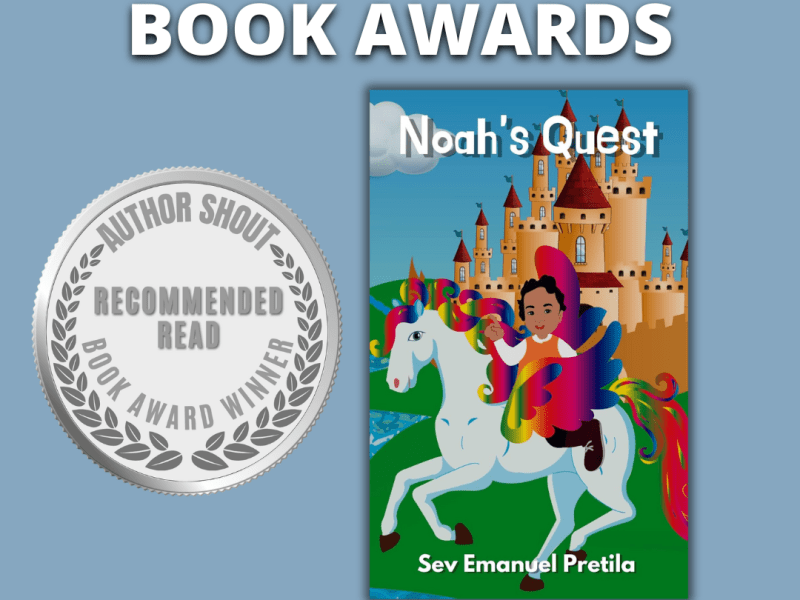
Noah’s Quest® is a 7th Annual Author Shout Book Awards Recommended Read Winner
Noah’s Quest® by Sev Emanuel Pretila has been recognized as a 7th Annual Author Shout Book Awards Recommended Read Winner, an honor that highlights its compelling storytelling and literary quality.
Something went wrong. Please refresh the page and/or try again.
Discover more from Noah's Quest®
Subscribe to get the latest posts sent to your email.
 Noah's Quest®