“The purpose of a storyteller is not to tell you how to think, but to give you questions to think upon.”
– Brandon Sanderson
The art of storytelling is as old as time. For centuries past, it has been used to teach our children about their heritage and equip them with life lessons to tackle the present. Storytelling is not just a medium of entertainment for children. It plays a key role in the holistic development of a child. Stories ignite imagination, promote empathy, and give rise to critical thinking in young minds. When children get to know the challenges characters face and how they overcome them, they gain a better understanding of their lives, and learn valuable lessons about resilience and compassion. By emotionally connecting with characters, children develop important social skills like cooperation and conflict resolution.
Listening to stories helps children create vivid mental images and enhances their imaginative power. Stories encourage kids to think outside the box and explore innovative ideas. They also inspire them to weave their own stories and express themselves in unique ways.
Let us have a detailed look at how parents and educators can use storytelling to inspire creativity and imaginative thinking in children.
Editor’s Note: The views expressed in this expert roundup reflect the individual perspectives of contributors based on their professional experience. While some references to neuroscience and developmental psychology are included, this article is intended for general informational purposes and should not be considered medical or clinical advice. For personalized guidance, please consult a qualified professional.
Storytelling Activates Both Emotional and Analytical Brain Centers
At Invensis Learning, the deeper impact of storytelling has consistently shown up in how it shapes not just knowledge retention but also cognitive development, and that applies even more powerfully to children. Storytelling activates both emotional and analytical centers of the brain, allowing kids to connect abstract ideas with lived experiences. One particularly effective method is having children co-create stories based on real-world challenges, like building a city on Mars or solving a mystery using science. This not only fuels imagination but also encourages systems thinking and problem-solving. The insight here is that storytelling, when framed as participatory and open-ended, transforms children from passive listeners into creative architects of their own learning—an ability that stays with them well beyond the classroom.
Arvind Rongala, CEO, Invensis Learning
——————————————-
Stories Link Language, Emotion, and Sensory Experiences
At Invensis, the transformative potential of storytelling has been evident in both professional learning environments and early education frameworks. Neuroscience research highlights that stories engage multiple areas of the brain simultaneously, linking language, emotion, and sensory experiences, which is why they’re so effective in stimulating imagination. One approach that has shown remarkable results is encouraging children to reimagine everyday situations as narrative challenges, like turning a math problem into a treasure hunt or explaining a science concept through a superhero’s journey. This not only sparks creativity but also builds cognitive flexibility and emotional intelligence. The key insight is that when children create meaning through stories, they aren’t just learning—they’re constructing mental models that fuel innovation and resilience well into adulthood.
Anupa Rongala, CEO, Invensis Technologies
——————————————-
Unfinished Stories Spark Children’s Creative Invention
Tell unfinished stories.
At home, I sometimes stop mid-plot and ask, “What happens next?” Kids dive in. They invent, twist, surprise me. You don’t need a perfect tale. You just need a starting point and a little silence. They’ll fill it.
Mateusz Mucha, Founder, CEO, Omni Calculator
——————————————-
Co-Authoring Stories Builds Neural Pathways for Innovation
The Architecture of Imagination: Storytelling as a Developmental Tool
In my practice as a child and adolescent psychiatrist, I often emphasize that storytelling is far more than simple entertainment; it’s a fundamental tool for building a child’s mind. When parents and educators learn to use it intentionally, they provide the scaffolding for creativity, emotional intelligence, and complex problem-solving. The key is to shift from passive listening to active, collaborative creation.
Make Them the Co-Author
The magic happens when a child’s role changes from audience to co-author. Pause the story and ask, “What do you think the dragon does next?” or “If you were the hero, what would you do differently?” This simple invitation transfers agency to the child, teaching them that their ideas have power. It validates their imagination and builds the neural pathways for innovative thinking, showing them there’s never just one solution to a problem.
A Safe Harbor for Big Feelings
Stories provide a unique space for children to process complex emotions from a safe distance. A child who is anxious about a new sibling can explore feelings of jealousy and love through a tale about a puppy joining a family. I’ve seen children in my psychiatry practice work through fears by creating stories where a small character bravely faces a gentle giant. It allows them to “externalize” the feeling, examining it and gaining mastery over it without being overwhelmed.
Build the World, Not Just the Plot
Encourage children to think beyond “what happens next.” Prompt them with sensory questions: “What does the enchanted forest smell like?” “What sounds do the spaceship’s buttons make?” This cultivates a richer form of imaginative thinking, moving from a simple sequence of events to the creation of an entire, multi-sensory world. This practice is the foundation for creativity in arts, sciences, and all aspects of life, fostering a deep and flexible mind.
Ishdeep Narang, MD, Child, Adolescent & Adult Psychiatrist | Founder, ACES Psychiatry
——————————————-
Storytelling Transforms Children into Creators of Ideas
Storytelling is such a powerful tool—it sparks imagination, helps kids make sense of their world, and invites them to see themselves as creators of ideas. When parents and educators tell stories (or co-create them with kids), they’re modeling flexible thinking, emotional insight, and the magic of “what if?” Even something as simple as asking, “What do you think happens next?” can light up a child’s creative brain. And when kids feel like their ideas are heard and valued, they start to trust their own voice—and that’s where real imaginative thinking begins.
Kelsey Feldman, Licensed Marriage and Family Therapist, The Garden Child and Family Therapy Center
——————————————-
Create Your Own Endings: Storytelling Beyond Listening
As both a parent and an educator, I’ve found that storytelling is a powerful tool to inspire creativity and imaginative thinking in children. One method I use is encouraging kids to create their own endings to stories. For example, after reading a story, I ask them what they think could happen next or how they would change the story. This sparks their imagination and helps them think outside the box. I also encourage them to tell their own stories, which not only boosts their creativity but also builds their communication skills. When children feel free to explore different characters, settings, and outcomes, they learn to think creatively and see the world in new ways. Storytelling isn’t just about listening—it’s about actively engaging and using the narrative as a platform for imaginative exploration.
Nikita Sherbina, Co-Founder & CEO, AIScreen
——————————————-
Co-Creation Strengthens Cognitive Flexibility and Emotional Intelligence
At Edstellar, the most insightful learning moments often stem from how a concept is framed and storytelling consistently proves to be the most powerful frame, especially for children. Neuroscience research shows that stories stimulate brain activity far beyond rote learning, activating areas linked to empathy, imagination, and decision-making. One of the most effective strategies is inviting children to become co-creators asking them to change a story’s ending, build a new world, or step into the shoes of a character facing a dilemma. This not only boosts creative confidence but also strengthens cognitive flexibility and emotional intelligence. The deeper insight is this: storytelling isn’t just about sparking imagination it’s a training ground for innovative thinking, helping children learn how to approach uncertainty with curiosity rather than fear.
Arvind Rongala, CEO, Edstellar
——————————————-
Open-Ended Tales Turn Listeners into Creative Thinkers
Keep it open-ended. When my son was young, I’d tell him half a story and let him finish it. One night, I left a tale on a cliffhanger—our hero stuck in a cave—and asked, “What happens next?” His eyes lit up. He started spinning wild solutions: flying cats, magic stones, time travel.
That small shift turned storytelling into a creative exercise. It wasn’t about getting the “right” ending, it was about creating his own. Parents and teachers can do the same. Leave blanks in the narrative. Invite kids to co-author. It teaches them to imagine, explore, and trust their ideas without fear of being wrong.
James McNally, Managing Director, SDVH [Self Drive Vehicle Hire]
——————————————-
Interactive Stories Transform Consumers into Creative Architects
A 6-year-old girl once used bedtime stories to make her own board game, and it won a local contest against teens. That changed the way I tell stories to kids for the rest of my life.
I learned that stories weren’t just for teaching lessons or relaxing. They could be the first steps in creating whole worlds that kids could build on. So I started letting kids *finish* the story instead of just listening. I’d stop halfway through and say, “What do you think happens next?” or “What would you do if you were the dragon?” Their answers were full of new ideas, like spaceships that ran on bubblegum, cities under the sea run by cats, or heroes who solved problems by painting.
The numbers support this. A study from the University of Cambridge in 2023 found that open-ended storytelling made kids 62% better at divergent thinking, which is a key part of being creative. Kids remembered 2.4 times more when they could interact with the stories than when they just listened.
The trick isn’t the story; it’s making it into a sandbox. In my case, we went even further by making maps, designing characters, or writing different endings. These times didn’t just keep the kids busy; they also made them creators. And that’s when the imagination really starts to work: when you go from being a consumer to a storyteller.
Martin Weidemann, Owner, Mexico-City-Private-Driver.com
——————————————-
Participatory Storytelling Empowers Children Through Narrative Play
Parents and educators can spark creativity through interactive, open-ended storytelling that invites children to co-author the narrative. Start with a simple prompt—”What if our hero could talk to animals?”—and pause for kids to suggest characters, settings, or plot twists. Encourage them to illustrate scenes or act out parts, blending visual and dramatic arts into the tale.
Use sensory detail exercises (“Describe how the enchanted forest smells”) to deepen imaginative engagement. Ask “What happens next?” questions at cliffhangers, allowing multiple endings and celebrating each unique idea. Rotate storytellers in a “story circle” so every child contributes a sentence, fostering collaborative invention.
Finally, integrate modern tools—story-creation apps or simple voice recordings—to document and revisit their creations, reinforcing confidence in their creative voice. By making storytelling a participatory, multisensory adventure, you empower children to think divergently and build resilience through narrative play.
Amir Husen, Content Writer, SEO Specialist & Associate, ICS Legal
——————————————-
Stories Connect Children to Emotions and New Perspectives
Storytelling serves as a powerful tool for fostering creativity and imaginative thinking in children because it connects them to emotions, experiences, and perspectives in ways that engage their developing minds. For parents and educators, the key lies in making the stories intentional and interactive. By weaving themes of resilience, empathy, and identity into storytelling, children can process complex ideas and emotions in safe and digestible ways, which is especially important for those navigating generational or racial trauma.
Encourage creativity by using open-ended stories that let kids imagine and build on the story themselves. Ask questions like, “What do you think happens next?” or, “How would you change the story?” This sparks their imagination and gives them a sense of control in shaping the story. Sharing stories that reflect their own experiences or introduce new perspectives can also help them relate to characters, build empathy, and promote inclusivity.
Storytelling builds connections. When parents and teachers share stories, they show kids that their experiences matter, encouraging confidence and curiosity. This can help kids dealing with anxiety, conflict, or self-doubt. Stories aren’t just for fun—they can heal, break patterns of trauma, and inspire a child’s imagination. Make the most of them.
Kristie Tse, Psychotherapist | Mental Health Expert | Founder, Uncover Mental Health Counseling
——————————————-
Storytelling Builds Creative Muscles at Every Age
Research and everyday parenting both show that storytelling is a powerful way to boost children’s creativity and imagination. When parents or teachers share stories, kids don’t just listen they picture the scenes, imagine the characters, and fill in the gaps themselves. This active mental play builds their creative muscles. Think of a bedtime story where a child pictures a magical forest that mental image is the start of imaginative thinking, just like playing with blocks helps build physical skills.
Children’s brains develop in stages that naturally support storytelling and imagination. Younger kids tend to think very concretely, so stories with clear, relatable characters and simple plots work best. As kids grow, they begin to understand more abstract ideas, which means stories with complex plots or “what if” scenarios can spark deeper creativity. If parents adapt stories to match their child’s stage, children are more likely to stay engaged and develop stronger imaginative skills. For example, a toddler hearing about animals in a forest can start to recognize shapes and sounds, while a preteen imagining what it would be like to explore space can practice problem solving.
In everyday life, storytelling fits naturally with many parenting moments. At the dinner table, a parent might share a story about their day, encouraging the child to ask questions or imagine different endings. On car rides, parents can make up stories that include family members or places they’ve visited, turning routine time into creative play. This is similar to how travel based learning opens children’s minds to new cultures and ideas, deepening their curiosity and creativity. Just like how choosing safe, age appropriate toys supports physical development, selecting stories that match a child’s interests and stage supports their mental growth.
What this means for parents is that storytelling doesn’t have to be complicated or lengthy to make a big difference. Simple stories, told with enthusiasm and invitations for the child to imagine or add their own ideas, can spark creativity daily. As children grow, parents can introduce more complex themes or ask open ended questions to stretch thinking. This ongoing practice not only nurtures imagination but also strengthens language skills and emotional understanding, helping children become confident, creative learners.
Mona Hovaizi, Founder & CEO, Gaux
——————————————-
Hand the Mic to Kids: Permission to Dream
Ditch the polished endings and hand the mic to the kids. One trick that works like magic: start a story, then stop mid-way and ask, “What happens next?” It turns passive listeners into active creators. Suddenly, they’re not just absorbing—they’re building worlds, solving problems, and flexing their imagination like a muscle. Doesn’t matter if the plot goes off the rails—that’s where the good stuff lives. Storytelling isn’t about right answers, it’s about giving kids permission to dream out loud.
Justin Belmont, Founder & CEO, Prose
——————————————-
Ground Stories in Reality, Add Magic for Wonder
Storytelling is a bridge to possibility. I’ve used it to spark curiosity by weaving real-world situations into fantastical tales. For example, after a big storm here, I told kids a story about a hidden world beneath the flooded streets—where mold turned into mischievous creatures only kids could outsmart.
They weren’t just entertained, they were solving problems, imagining tools, and building strategies. Stories like that make creativity feel natural, not forced. My advice? Ground stories in something familiar, then add just enough magic to let kids wonder, “What if?” That’s where imagination starts working like a muscle and keeps growing.
David Struogano, Managing Director and Mold Remediation Expert, Mold Removal Port St. Lucie
——————————————-
Digital Tools Transform Children into Active Story Creators
Being in game development for 15 years, I’ve seen how interactive storytelling through simple tech tools can transform learning. Just last month, we created a basic story-building app where kids design their own game characters and watch them come to life through AI-generated animations – the excitement on their faces was incredible. I recommend using digital storytelling tools that let children control the narrative, like choosing story paths or designing characters, which makes them active creators rather than passive listeners.
John Cheng, CEO, PlayAbly.AI
——————————————-
Stories Challenge Minds to See Different Possibilities
Storytelling offers a simple way for parents and educators to pass on creativity to children. When you tell stories, you are giving children the chance to invent new ideas and see many different possibilities. This causes their minds to move away from facts and routines and challenges them to become more open-ended.
Engaging the children in the story does make a large impact. When they imagine what might happen next or invent their endings, they are practicing how to coordinate ideas and express themselves. This kind of interaction builds creative thinking and communication skills.
Stories also help children understand points of view, which enhances their ability to relate to others. Adding stories to your routine with children makes it a platform where their imagination is fostered. Such small moments can leave a long-lasting impact on how children approach thinking and solving problems in life.
Cory Arsic, Founder, Canadian Parent
——————————————-
Interactive Narratives Foster Critical Thinking and Creativity
Storytelling is a powerful tool for inspiring creativity and imaginative thinking in children. Parents and educators can use storytelling to create engaging narratives that encourage kids to envision new worlds, solve problems, and explore emotions. Interactive storytelling where children contribute to the tale fosters critical thinking and creativity. Also, using diverse stories from different cultures broadens their perspective, while linking stories to real-life experiences helps them connect ideas and develop their imagination further. Always encourage children to craft their own stories, as this nurtures self-expression and builds confidence.
David Zhang, CEO, Kate Backdrops
——————————————-
Open-Ended Stories Fire Up Children’s Imagination
I’ve always found storytelling to be a magic key when it comes to sparking creativity in kids. One trick I’ve picked up is using open-ended stories where kids get to decide what happens next. It really gets their imagination firing! Plus, incorporating elements from their own lives makes it more relatable and engaging for them. They start seeing themselves as part of any story, which boosts their creative thinking even more.
Another thing that’s worked well is having storytelling sessions where everyone contributes a part of the story, kind of like building a Lego castle but with ideas. This not only teaches them how to collaborate, but also shows them how diverse thoughts can weave into a single beautiful narrative. It’s like you’re giving them a sandbox to play in with their thoughts. Encouraging them to draw or act out parts of the story can also add layers to their imaginations. Always remind them that there’s no wrong way to tell a story; it’s all about having fun and letting their ideas run wild!
Alex Cornici, Marketing & PR Coordinator, Magic Hour AI
——————————————-
Digital Storytelling Sparks Collaborative Creative Excitement
Being a language school founder, I’ve seen how digital storytelling tools can transform creativity in amazing ways. Last month, we used Tutorbase’s interactive portal to let students create their own dragon character and collaboratively build a story – the excitement was incredible as each child added new plot twists. I recommend starting with simple prompts like ‘What if your pet could talk?’ and using technology to let kids record and illustrate their stories, making the experience both engaging and accessible.
Sandro Kratz, Founder, Tutorbase
——————————————-
Storytelling Creates Safe Space for Emotional Processing
As a mental health professional working with adolescents, I’ve found that storytelling helps kids process emotions and boost imagination in a safe space. Just last week, I had a group session where teens created stories about their ‘inner superheroes,’ which led to wonderful discussions about courage and self-discovery. I suggest using open-ended stories where children can choose different endings, as this helps them explore multiple perspectives and develop creative problem-solving skills.
Aja Chavez, Executive Director, Mission Prep Healthcare
——————————————-
Bilingual Stories Mix Reality with Imaginative Adventures
In my French language classes, I’ve discovered that letting students create bilingual stories about their daily adventures makes learning incredibly fun and personal. Last semester, my students wrote and illustrated a story about a ‘magical baguette’ that could transport people to different French cities – their creativity exploded when they realized they could mix reality with imagination. I encourage educators to start with simple prompts from students’ own experiences, then gradually add fantasy elements that let their imaginations soar while learning.
David Cornado, Partner, French Teachers Association of Hong Kong
——————————————-
Therapeutic Stories Help Children Solve Real Challenges
From my experience in mental healthcare, I’ve noticed how storytelling can be a powerful tool for developing emotional intelligence and creative thinking. In my practice, we often use therapeutic storytelling where kids create characters facing similar challenges to their own, which helps them think creatively about solutions while feeling less overwhelmed. I recommend starting bedtime routines with ‘what if’ questions that spark imagination – like ‘what if clouds were made of cotton candy?’ – and letting your child guide the story’s direction.
Lori Leonard, Chief Medical Officer, Mindset & Body Reset
We’d love to hear from you!
What did you think about this article? Share your thoughts in the comments below!
- What’s one idea from this article that inspired you the most?
- How will you try this in your own family adventures?
- Do you have any fun tips or experiences to add to the quest?
Let’s keep the conversation going! 🌟
About Noah’s Quest® Insights
Hey there, friends! This is 11-year-old Noah from the book of Sev Emanuel Pretila, Noah’s Quest®. Welcome to Noah’s Quest® Insights! This is the spot where super-smart grown-ups (and some pretty cool kids with adult help) share their best ideas to make family time extra special. Think of it like a treasure map packed with all kinds of ways to have fun, learn new things, and go on big adventures—together! Whether it’s finding your next favorite book, making something awesome, or just discovering cool ways to connect, Noah’s Quest® Insights is here to help.
Every article is made for families with kids 12 and under, just like me, and it’s all about making life more fun, creative, and full of wholesome adventure. So grab your imagination, your adult (if you’re a kid like me), and let’s go exploring!
Read my story, too!

Did you know that before the Noah’s Quest and Friends Fave Book Award, the blog, or the awards program, there was a book all about me? Yup, I’m the main character in an awesome story by Sev Emanuel Pretila! It’s called Noah’s Quest. If you’re curious about how it all began and want to read my adventure, you’ve got to check it out. You’ll love it—I pinky promise! Adventure is waiting! Visit the About the Book page to get started.
– Noah from Noah’s Quest by Sev Emanuel Pretila
P.S. The book is just 99 cents on Amazon today! Hurry! Check it out here. Thanks!
Helpful Shortcuts
- About Noah’s Quest®
- About the Book: Noah’s Quest® by Sev Emanuel Pretila
- Blog
- Contact Us
- Friends of Noah’s Quest®
- Making a Difference
- News
- Noah’s Quest® and Friends Blog
- Noah’s Quest® Interviews
- Noah’s Quest® Merch
- Noah’s Quest® Privacy Policy, Terms of Service, and Disclaimer (Version for Adults)
- Noah’s Quest® Review Requests
- Noah’s Quest® Terms of Service
- Noah’s Quest® Website Disclaimer
- Noah’s Quest® and Friends Fave Books Award
- Noah’s Quest® Insights
- Noah’s Quest® Privacy Policy
- Noah’s Quest® Review Policy
- Subscribe to Noah’s Quest®
- Testimonials
Recommended Reads

Principles and Mindsets for Guiding Children Through Uncertainty and New Adventures
What if not knowing was your child’s secret superpower, not a flaw? This roundup explores how educators and leaders rethink uncertainty—and invites you to discover why by reading on inside.
Keep reading
New Year Stories or Themes Teaching Children Goal-Setting, Kindness, and New Beginnings
Ever wonder why kids love drawing their goals or acting out stories? Find out how small steps, peer cheer, and creative play can actually help kids succeed in real life.
Keep reading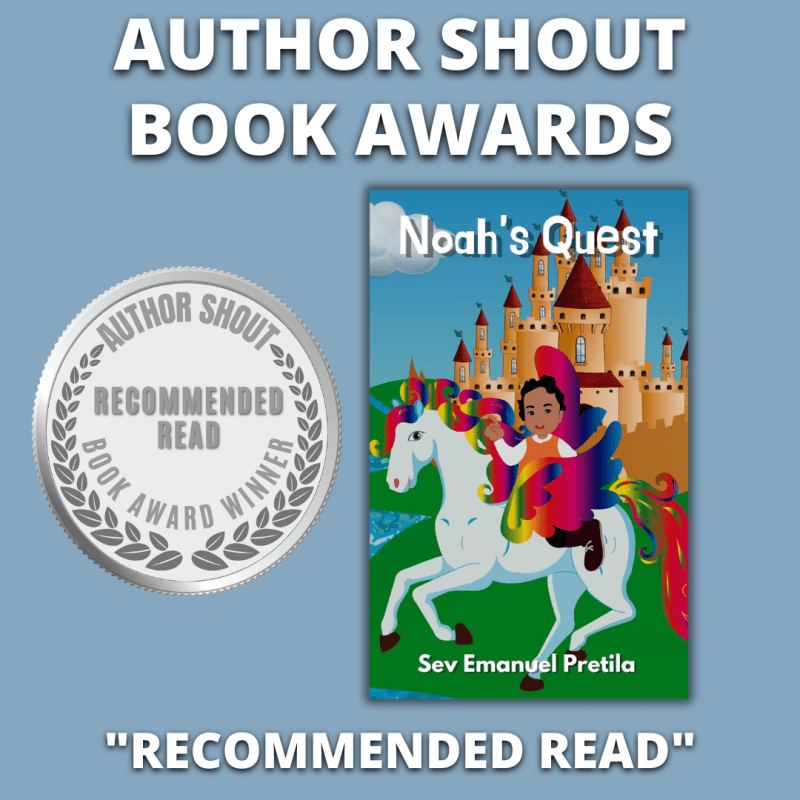
Noah’s Quest® is a 7th Annual Author Shout Book Awards Recommended Read Winner
Noah’s Quest® by Sev Emanuel Pretila has been recognized as a 7th Annual Author Shout Book Awards Recommended Read Winner, an honor that highlights its compelling storytelling and literary quality.
Keep readingSomething went wrong. Please refresh the page and/or try again.
Discover more from Noah's Quest®
Subscribe to get the latest posts sent to your email.
 Noah's Quest®